

Apr 2, 2026
December 16, 2025
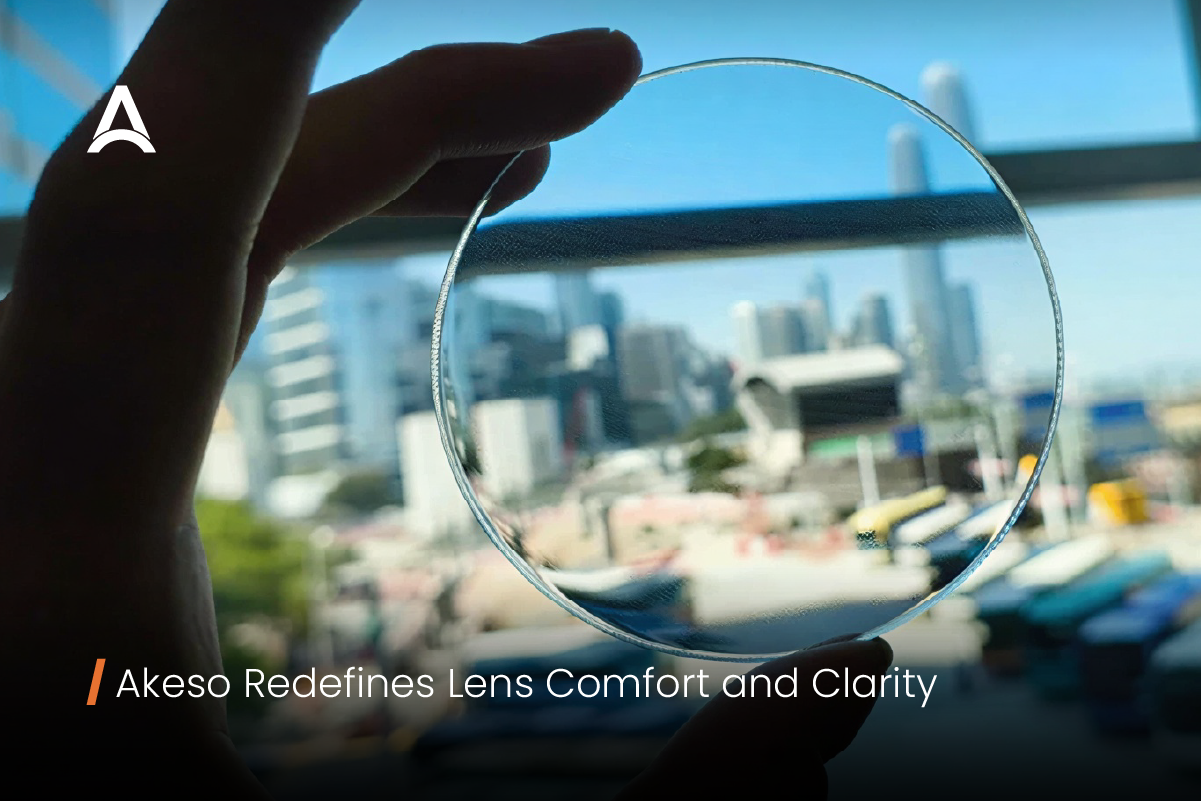
Many parents and children have noticed that when wearing contrast control lenses, a slight sense of blur can occasionally appear around the lens edges.
Some parents have also shared feedback that after a period of use, certain lenses did not meet expectations for wear resistance, affecting long term visual clarity.
Behind these experiences lies a factor that is often overlooked: the manufacturing process used in lens contrast technology.
Until recently, many contrast control lenses on the market relied on laser ablation technology. While the term sounds advanced, this process can quietly compromise visual quality and lens durability over time.
In response, Akeso has introduced a fundamentally different approach.
Akeso’s MetaRx Lens Photolithography Contrast Technology, developed through proprietary innovation, has begun redefining industry standards and setting a new benchmark for lens comfort, clarity, and longevity.
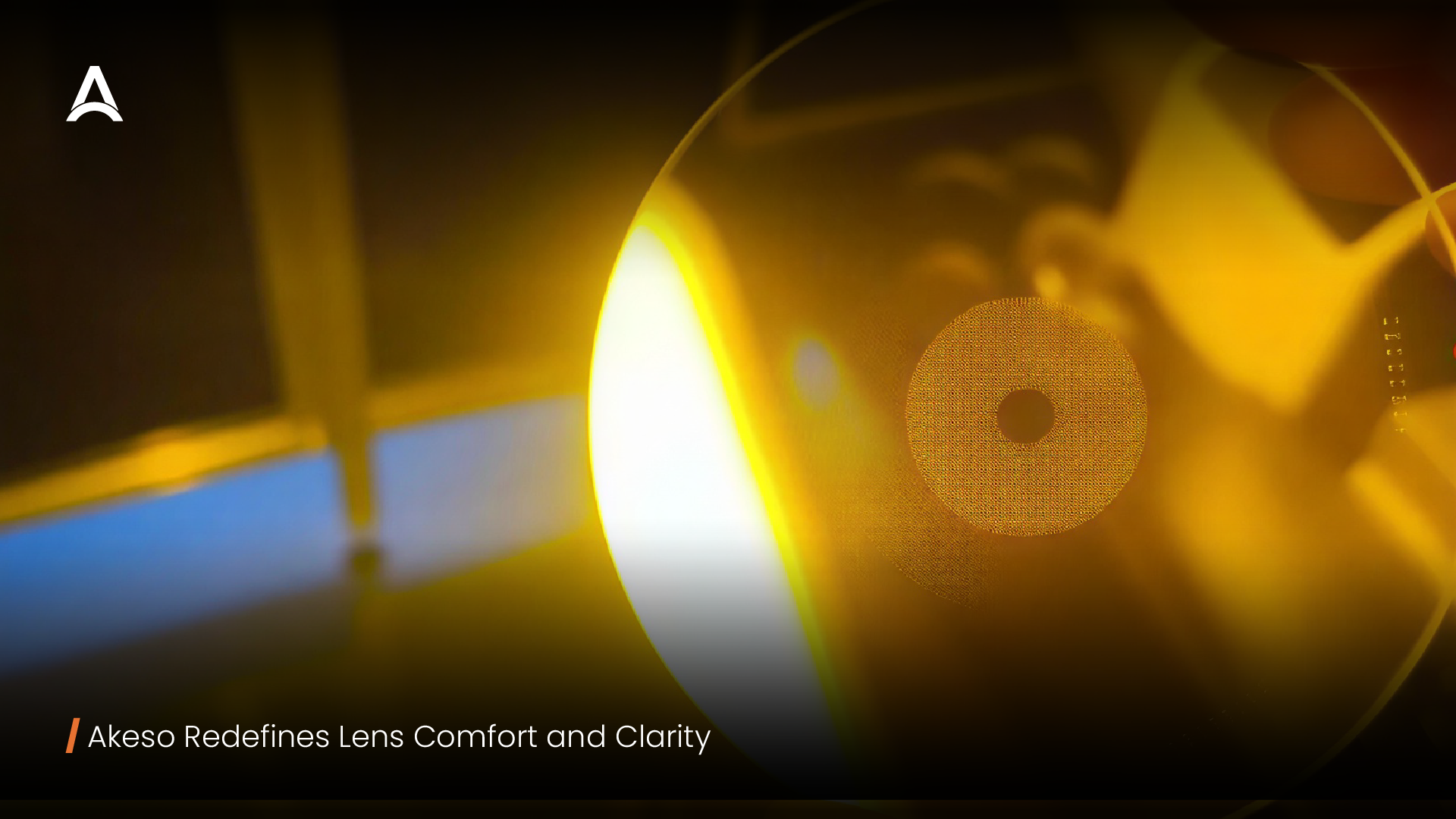
In simple terms, lens contrast technology is designed to reduce the brightness and intensity of light entering the eye. By stimulating the cone and rod cells on the retina, it disrupts the habitual pattern of axial eye growth, allowing children to receive light that is closer to natural conditions and helping to slow the progression of myopia.
Traditional laser based methods achieve this effect by burning the lens surface. In contrast, Akeso employs nano level photolithography, a process comparable to precisely drawing uniform and delicate microstructures directly onto the lens surface. This approach does not damage the lens and does not compromise optical performance.
Akeso photolithography contrast technology combines proprietary photoresist materials with the principles of Rayleigh scattering optics. By refining and dispersing light passing through the lens, contrast is reduced to achieve myopia control effects.
Rayleigh scattering, also known as molecular scattering, occurs when particle sizes are significantly smaller than the wavelength of incident light, typically less than one tenth of the wavelength. The scattering intensity is inversely proportional to the fourth power of the light wavelength, resulting in a more effective reduction of contrast.

Using MetaRx lens photolithography, nano materials are added to the lens surface to form ultra fine scattering microstructures. This additive process preserves the integrity of the lens surface while maintaining original optical properties.
Laser Ablation Technology
Laser energy is used to burn the lens surface, carving points like scattering spots that damage the surface and can lead to stress concentration, reducing durability.
Akeso Photolithography Contrast Technology
Lens materials and coating characteristics are preserved, making lenses easier to clean, more wear resistant, and capable of maintaining stable and clear visual quality over extended use.
Laser Ablation Technology
Surface pits formed during processing easily trap debris, reducing coating lifespan and wear resistance, with visual quality declining over time.

Akeso Photolithography Contrast Technology
Nano microstructures are small in diameter and evenly distributed, producing soft and natural reflected light. Lenses appear more transparent and visually refined.
Laser Ablation Technology
Scattering spots are larger and uneven in depth, resulting in rough and inconsistent surface reflections and reduced aesthetic quality.
Akeso Photolithography Contrast Technology
Contrast transitions are smooth and gentle, delivering high visual quality and easier adaptation. Haze values and central optical zones can be customized to individual needs.
Laser Ablation Technology
Surfaces exhibit a noticeable frosted texture, with lower visual quality. Older children often require longer adaptation periods, and haze values are fixed and not adjustable.

Choosing a pair of lenses is not merely choosing a product, but selecting a technological pathway and a promise of quality.
Through independently developed photolithography contrast technology, Akeso has redefined what clarity, comfort, and durability mean in modern visual experiences.
Lenses that do not damage the surface and do not compromise vision are companions worthy of supporting a child’s growth.
Technology should illuminate the path ahead, not obscure sight.
Choose Akeso.
Choose lenses that truly understand light.
Akeso Eyecare is a doctor-founded eye-technology company and CDMO focused on improving vision care. We design and build advanced solutions like AR displays for myopia prevention, eye tracking, extended reality devices, and digital vision health tools used in eye care and smart technology.
Our mission is to improve global vision health through smart innovation. By combining optical design, materials science, and AI, our R&D team supports partners from early research to custom design, manufacturing, and large-scale production, always guided by medical expertise, collaboration, sustainability, and patient-first thinking.
Akeso – engineering the future of vision.
Engineering the
Future of Vision.